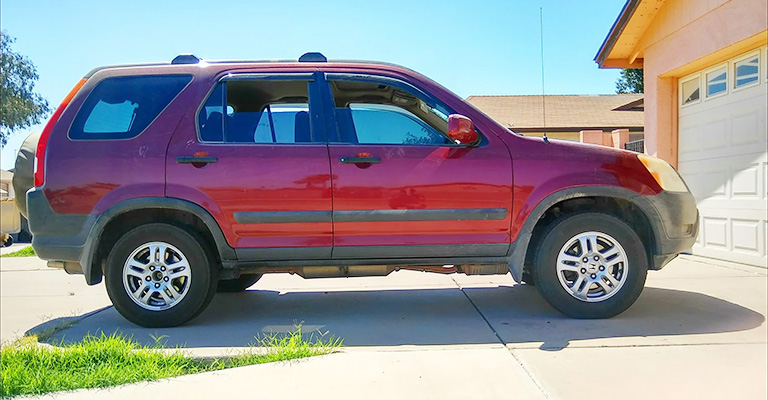
The 2003 Honda CR-V is a compact SUV that was popular for its reliability, fuel efficiency, and practicality. However, like any vehicle, it may have experienced certain problems during its production run.
Some common issues reported by owners of the 2003 Honda CR-V include transmission problems, engine issues, and electrical issues.
It’s important to note that not all 2003 CR-Vs may have experienced these issues, and the frequency of these problems may vary depending on the individual vehicle and its maintenance history.
It’s always a good idea to have a mechanic inspect a used car before purchasing it, in order to identify any potential problems and make an informed decision.
2003 Honda CR-V Problems
1. Air Conditioning is Blowing Warm Air
This is a common problem with the 2003 Honda CR-V, as many owners have reported that the air conditioning system is not working properly and is blowing warm air instead of cool.
This issue can be caused by a variety of factors, including a faulty compressor, a low refrigerant level, or a malfunctioning thermostat.
It is recommended to have a mechanic diagnose and repair the issue, as attempting to fix the problem oneself may result in further damage to the system.
2. Door Lock May be Sticky and Not Work Due to Worn Door Lock Tumblers
Some 2003 Honda CR-V owners have reported that the door lock mechanism may become sticky or difficult to use over time.
This issue is often caused by worn door lock tumblers, which are small components that help the lock mechanism function properly.
In some cases, the door lock tumblers may need to be replaced in order to fix the issue.
3. Groaning Noise on Turns Due to Differential Fluid Breakdown
Some 2003 Honda CR-V owners have reported a groaning noise when turning the vehicle, which may be caused by a breakdown of the differential fluid.
The differential is a component that helps transfer power from the engine to the wheels, and it requires a specific type of fluid to function properly.
If the fluid breaks down or becomes contaminated, it can cause the differential to make a loud noise when turning. It is recommended to have a mechanic check and replace the differential fluid if necessary in order to fix this issue.
4. Harsh Shift From First to Second Gear in Automatic Transmission
Some 2003 Honda CR-V owners have reported experiencing a harsh shift from first to second gear when driving with an automatic transmission. This issue can be caused by a variety of factors, including a faulty transmission control module, a damaged transmission seal, or a malfunctioning shift solenoid.
It is recommended to have a mechanic diagnose and repair the issue, as attempting to fix the problem oneself may result in further damage to the transmission.
5. Warped Front Brake Rotors May Cause Vibration When Braking
Some 2003 Honda CR-V owners have reported experiencing a vibration when braking, which may be caused by warped front brake rotors. Brake rotors can become warped due to excess heat, improper installation, or uneven wear.
If the brake rotors are warped, it can cause the brake pads to vibrate against the rotors, leading to a vibration when braking. It is recommended to have a mechanic inspect the brake rotors and replace them if necessary in order to fix this issue.
6. Wipers Won’t Park Due to Windshield Wiper Motor Failure
Some 2003 Honda CR-V owners have reported that the windshield wipers may not park properly or may not work at all. This issue is often caused by a failure of the windshield wiper motor, which is responsible for moving the wipers back and forth across the windshield.
If the wiper motor fails, it may cause the wipers to stop functioning or to park in the wrong position. It is recommended to have a mechanic diagnose and repair the issue, as attempting to fix the problem oneself may result in further damage to the wipers or the wiper motor.
7. Tailgate Light on Dash May Flicker
Some 2003 Honda CR-V owners have reported that the tailgate light on the dashboard may flicker or flash intermittently. This issue can be caused by a variety of factors, including a faulty tailgate switch, a damaged wiring harness, or a malfunctioning dashboard light.
It is recommended to have a mechanic diagnose and repair the issue, as attempting to fix the problem oneself may result in further damage to the vehicle.
8. Water Leaking from the Base of the Windshield
Some 2003 Honda CR-V owners have reported that water may leak from the base of the windshield, which can cause damage to the interior of the vehicle.
This issue can be caused by a variety of factors, including a faulty windshield seal, a damaged weatherstripping, or a malfunctioning drain tube.
It is recommended to have a mechanic diagnose and repair the issue, as attempting to fix the problem oneself may result in further damage to the vehicle.
9. Check Engine Light on Due to Binding Fuel Cap
Some 2003 Honda CR-V owners have reported that the check engine light may come on due to a binding fuel cap. This issue can be caused by a faulty fuel cap, which may not seal properly, allowing air to enter the fuel system.
If the fuel cap is not sealing properly, it can trigger the check engine light and cause other issues with the vehicle’s fuel system. It is recommended to have a mechanic diagnose and replace the fuel cap if necessary in order to fix this issue.
10. Check Engine Light due to Sticking Intake Manifold Runner Solenoid
Some 2003 Honda CR-V owners have reported that the check engine light may come on due to a sticking intake manifold runner solenoid.
The intake manifold runner solenoid is responsible for controlling the flow of air into the engine, and if it becomes stuck or malfunctions, it can trigger the check engine light and cause issues with the vehicle’s performance.
It is recommended to have a mechanic diagnose and replace the intake manifold runner solenoid if necessary in order to fix this issue.
11. Grinding Noise From Rear Disc Brakes Due to Corrosion of the Caliper Bracket
Some 2003 Honda CR-V owners have reported experiencing a grinding noise from the rear disc brakes, which may be caused by corrosion of the caliper bracket.
The caliper bracket is a component that holds the brake caliper in place and allows it to move back and forth as the brakes are applied.
If the caliper bracket becomes corroded, it can cause the brake caliper to bind and make a grinding noise when the brakes are applied.
It is recommended to have a mechanic inspect the caliper bracket and replace it if necessary in order to fix this issue.
12. Noise From Water Pump Bearing
Some 2003 Honda CR-V owners have reported hearing a noise coming from the water pump bearing, which may be caused by a faulty bearing or a malfunctioning water pump.
The water pump is responsible for circulating coolant throughout the engine, and if the bearing or pump fails, it can cause a noise and potentially damage the engine.
It is recommended to have a mechanic diagnose and replace the water pump or bearing if necessary in order to fix this issue.
13. Check Engine Light on Due to Faulty Fuel Tank Pressure Sensor
Some 2003 Honda CR-V owners have reported that the check engine light may come on due to a faulty fuel tank pressure sensor.
The fuel tank pressure sensor is responsible for measuring the pressure inside the fuel tank, and if it fails or becomes damaged, it can trigger the check engine light and cause issues with the vehicle’s fuel system.
It is recommended to have a mechanic diagnose and replace the fuel tank pressure sensor if necessary in order to fix this issue.
14. Check Engine Light due to Defective Throttle Body
Some 2003 Honda CR-V owners have reported that the check engine light may come on due to a defective throttle body. The throttle body is a component that controls the flow of air into the engine, and if it becomes stuck or malfunctions,
it can trigger the check engine light and cause issues with the vehicle’s performance. It is recommended to have a mechanic diagnose and replace the throttle body if necessary in order to fix this issue.
15. Incorrect Oil in Rear Differential May Cause Chattering/Vibration on Turns
Some 2003 Honda CR-V owners have reported experiencing chattering or vibration when turning the vehicle, which may be caused by using the incorrect oil in the rear differential.
The rear differential is a component that helps transfer power from the engine to the wheels, and it requires a specific type of oil to function properly. If the wrong oil is used, it can cause the differential to make a noise or vibrate when turning.
It is recommended to use the correct oil and have a mechanic check the rear differential in order to fix this issue.
Possible Solution
| Problem | Possible Solution |
| Air Conditioning is Blowing Warm Air | Have a mechanic diagnose and repair the issue, which may include replacing a faulty compressor, refilling the refrigerant, or replacing a malfunctioning thermostat. |
| Door Lock May be Sticky and Not Work Due to Worn Door Lock Tumblers | Have a mechanic inspect the door lock tumblers and replace them if necessary. |
| Groaning Noise on Turns Due to Differential Fluid Breakdown | Have a mechanic check and replace the differential fluid if necessary. |
| Harsh Shift From First to Second Gear in Automatic Transmission | Have a mechanic diagnose and repair the issue, which may include replacing a faulty transmission control module, fixing a damaged transmission seal, or replacing a malfunctioning shift solenoid. |
| Warped Front Brake Rotors May Cause Vibration When Braking | Have a mechanic inspect the brake rotors and replace them if necessary. |
| Wipers Won’t Park Due to Windshield Wiper Motor Failure | Have a mechanic diagnose and repair the issue, which may include replacing the windshield wiper motor. |
| Tailgate Light on Dash May Flicker | Have a mechanic diagnose and repair the issue, which may include replacing a faulty tailgate switch, repairing a damaged wiring harness, or replacing a malfunctioning dashboard light. |
| Water Leaking from the Base of the Windshield | Have a mechanic diagnose and repair the issue, which may include replacing a faulty windshield seal, repairing damaged weatherstripping, or replacing a malfunctioning drain tube. |
| Check Engine Light on Due to Binding Fuel Cap | Have a mechanic diagnose and replace the fuel cap if necessary. |
| Check Engine Light due to Sticking Intake Manifold Runner Solenoid | Have a mechanic diagnose and replace the intake manifold runner solenoid if necessary. |
| Grinding Noise From Rear Disc Brakes Due to Corrosion of the Caliper Bracket | Have a mechanic inspect the caliper bracket and replace it if necessary. |
| Noise From Water Pump Bearing | Have a mechanic diagnose and replace the water pump or bearing if necessary. |
| Check Engine Light on Due to Faulty Fuel Tank Pressure Sensor | Have a mechanic diagnose and replace |
2003 Honda CR-V Recalls
| Recall Number | Problem | Affected Models |
| 19V501000 | Newly Replaced Passenger Air Bag Inflator Ruptures During Deployment Spraying Metal Fragments | 10 |
| 19V499000 | Newly Replaced Driver’s Air Bag Inflator Ruptures During Deployment Spraying Metal Fragments | 10 |
| 19V182000 | Driver’s Frontal Air Bag Inflator Ruptures During Deployment Spraying Metal Fragments | 14 |
| 18V268000 | Front Passenger Air Bag Inflator Potentially Installed Improperly During Replacement | 10 |
| 15V370000 | Front Passenger Air Bag Defective | 7 |
| 15V320000 | Driver’s Front Air Bag Defective |
Recall 19V501000:
This recall affects certain 2003 Honda CR-V models equipped with a passenger air bag inflator. The recall was issued due to the risk that the inflator may rupture during deployment, spraying metal fragments and potentially causing serious injury or death to the vehicle occupants.
Recall 19V499000:
This recall affects certain 2003 Honda CR-V models equipped with a driver’s air bag inflator. The recall was issued due to the risk that the inflator may rupture during deployment, spraying metal fragments and potentially causing serious injury or death to the vehicle occupants.
Recall 19V182000:
This recall affects certain 2003 Honda CR-V models equipped with a driver’s frontal air bag inflator. The recall was issued due to the risk that the inflator may rupture during deployment, spraying metal fragments and potentially causing serious injury or death to the vehicle occupants.
Recall 18V268000:
This recall affects certain 2003 Honda CR-V models that had the front passenger air bag inflator replaced. The recall was issued due to the risk that the inflator may have
been installed improperly, which could cause the air bag to deploy improperly in the event of a crash, increasing the risk of injury to the vehicle occupants.
Recall 15V370000:
This recall affects certain 2003 Honda CR-V models equipped with a front passenger air bag. The recall was issued due to the risk that the inflator may rupture during deployment, spraying metal fragments and potentially causing serious injury or death to the vehicle occupants.
Recall 15V320000:
This recall affects certain 2003 Honda CR-V models equipped with a driver’s front air bag. The recall was issued due to the risk that the inflator may rupture during deployment, spraying metal fragments and potentially causing serious injury or death to the vehicle occupants.
Recall 14V700000:
This recall affects certain 2003 Honda CR-V models equipped with a front airbag inflator module. The recall was issued due to the risk that the inflator may rupture during deployment, spraying metal fragments and potentially causing serious injury or death to the vehicle occupants.
Recall 14V353000:
This recall affects certain 2003 Honda CR-V models equipped with a front airbag inflator module. The recall was issued due to the risk that the inflator may rupture during deployment, spraying metal fragments and potentially causing serious injury or death to the vehicle occupants.
Recall 12V486000:
This recall affects certain 2003 Honda CR-V
Problems and Complaints Sources
https://repairpal.com/2003-honda-cr-v/problems/2
https://www.carcomplaints.com/Honda/CR-V/2003/
All Honda CR-V years we talked –