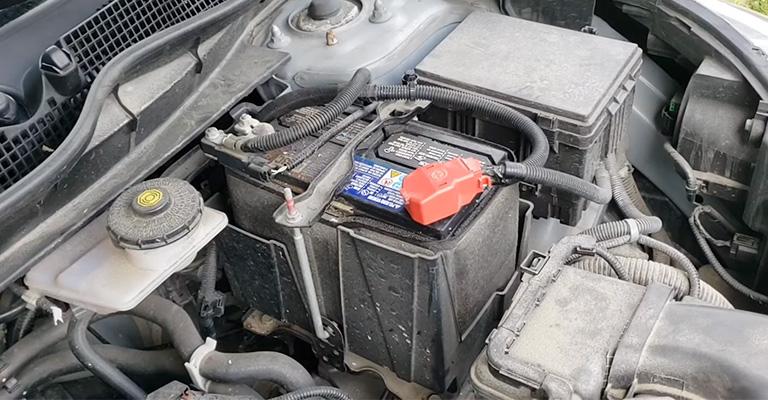
BMW vehicles are engineered with advanced electronics, making accurate diagnostics essential for proper maintenance and repair.
Using a dedicated BMW scan tool allows you to read manufacturer specific fault codes, access hidden modules, reset service lights, and monitor real time vehicle data with confidence.
Whether you are a professional mechanic or a BMW owner who prefers DIY maintenance, the right diagnostic tool can save time and prevent costly mistakes.
From basic code readers to advanced professional scanners, modern BMW scan tools offer powerful features tailored to different needs and budgets. Choosing the best option ensures faster troubleshooting, precise repairs, and long term vehicle performance.
6. ANCEL BM700 PRO OBD2 Scanner
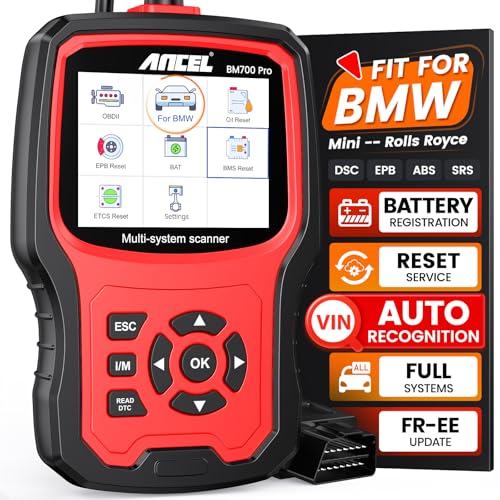
The ANCEL BM700 PRO feels like a professional diagnostic tool that fits right in your pocket. Plug it into your BMW, Mini, or Rolls‑Royce, and the AUTO V‑IN feature instantly pulls up the exact model details—no manual model selection, no guesswork.
Within a minute it scans every system from the engine to the TPMS, and the live data graphs are so clear you can spot a coolant leak or an idle‑control issue before it turns into a costly repair.
Battery registration is a breeze: just one click and the tool updates the battery’s ID, keeping the charging system happy and the dashboard free of warning lights.
The I/M readiness test is a lifesaver for annual inspections; the one‑button pull‑up shows you exactly what the inspection software will see.
And because it’s truly plug‑and‑play, you don’t need a laptop or a complicated interface—just a car and the BM700 PRO.
The dual‑mode display and multi‑language support mean you can read the screen in day or night mode, and switch to German, French, or Spanish without extra cost.
The OBD‑6 modes cover everything from engine codes to EVAP and live data, giving you a full diagnostic picture even if you’re a DIY enthusiast.
Pros
- Auto V‑IN auto‑identifies vehicle model, cutting setup time
- One‑click battery registration eliminates manual coding
- Real‑time data streams make troubleshooting instant and intuitive
- Dual‑mode display and multilingual interface fit every user
Cons
- Limited to BMW‑family vehicles; not a universal OBD‑II scanner
- Some advanced reset functions require a professional to interpret results
Overall, the BM700 PRO is a compact powerhouse that turns complex BMW diagnostics into a quick, user‑friendly experience.
5. ANCEL BD300 BMW OBD2 Scanner, Code Reader & Diagnostic Tool

The ANCEL BD300 turned out to be a game‑changer for my BMW X5. Plugging it into the OBD‑II port was a breeze, and within seconds the Bluetooth paired with my phone.
The free app is slick, offering real‑time data, full‑system code reading, and even a live oxygen sensor test. I’ve been able to reset EPB, CBS, and even clear service‑required codes after fixing issues—no need for a shop visit.
What really impressed me is the battery registration feature. After a new battery, I simply hit the “battery registration” button, and the warning light vanished instantly.
The scanner also handles throttle adaptation and brake pad resets, which saves a ton of time and money. The dual‑LED indicators keep me informed whether it’s powered on or connected, so I never waste a scan.
The device’s compatibility is another win. It works with any 16‑pin OBD‑II car from 1998 onward, yet it shines with BMW, MINI, and Rolls‑Royce models.
Six language options make it truly global. Plus, the lifetime free software updates mean I’ll always have the latest diagnostics without paying extra.
Pros
- Bluetooth + app: instant, wire‑free diagnostics on your phone
- Full BMW coverage: reads and clears codes across engine, transmission, ABS, and more
- Battery registration: eliminates battery warning lights in seconds
- Free lifetime updates: stay current without subscription fees
Cons
- No PC support, so you’re limited to smartphones or tablets
- Cannot program or change battery capacity—only registers existing batteries
Overall, the BD300 is a compact, powerful tool that turns my car into a diagnostic center. It’s perfect for DIY mechanics and
4. ANCEL AD310 OBD II Scanner

The ANCEL AD310 feels like a pocket‑sized mechanic in your hands. From the moment I plugged it into my 2012 Civic, the bright screen lit up with a clear “Check Engine” code and live sensor data.
The 2.5‑foot cable is surprisingly thick and flexible—no more worrying about it snapping out of reach while you’re in the garage. The device draws power directly from the car, so there’s no need to hunt for batteries or a charger.
I’ve used it a handful of times, and each time the code reading and clearing happen in seconds, which means I can fix the issue and get back on the road without a long wait.
The scanner’s support for all major OBD‑II protocols (KWP2000, J1850, ISO9141, CAN) is a big plus. I’ve tried it on both a domestic sedan and a European SUV, and it handled both without a hitch.
The interface is clean and the screen is large enough to read freeze frames and I/M readiness status without squinting. The compact size (under 13 ounces) makes it easy to stash in a glove box or carry on road trips.
I also appreciate that it’s a “code reader” rather than a full diagnostic tool, which keeps the price point low while still delivering the essential functions for everyday maintenance.
Pros
- Lightning‑fast code reading and clearing
- Durable, flexible cable for easy use in tight spots
- Full OBD‑II protocol support for a wide range of vehicles
- Compact, lightweight design perfect for travel
Cons
- Limited to emission‑related diagnostics only
- Requires an OBD‑II interface; not usable with older OBD‑I cars
Overall, the AD310 is a reliable, no‑frills tool that delivers quick, accurate results without the bulk of a full diagnostic scanner.
3. FOXWELL NT510 Elite BMW Scanner

I’ve spent the last month using the FOXWELL NT510 Elite on my 2018 BMW X5, and it’s quickly become my go‑to tool for everything from quick code clears to full bi‑directional tests.
The interface is clean, and the 4‑inch color display makes it easy to navigate even when my car is on the road.
One of the biggest wins is the battery registration feature—just a click and my new AGM battery is set up with the BMS, saving me a trip to the dealer.
The real power comes with the bidirectional control; I was able to activate the fuel pump and EGR valve right in the shop, instantly spotting a sticking valve that would have cost me a full diagnostic run otherwise.
The tool also handles all the routine maintenance resets: oil light, ABS bleed, SAS calibration, throttle matching—everything that usually requires a dealer visit.
The I/M readiness check is a lifesaver for the annual smog test; I caught a minor O2 sensor issue before it triggered a full emission failure.
Live data from every module is a great way to keep tabs on coolant temperature, transmission oil temperature, and battery voltage without waiting for a service appointment.
Pros
- Instant battery registration—no dealer paperwork.
- Bi‑directional control lets you test actuators on the spot.
- Full maintenance reset suite—save on dealer visits.
- One‑click I/M readiness for hassle‑free smog checks.
Cons
- Compatibility varies—double‑check model years before buying.
- The interface can feel a bit dated compared to newer devices.
Overall, the NT510 Elite delivers 80 % of the services you’d normally pay for at a shop, and it does it all without a subscription. If you own a BMW, Mini, or Rolls‑Royce, this is a solid investment for the long run.
2. ANCEL BM700 PRO BMW Scanner
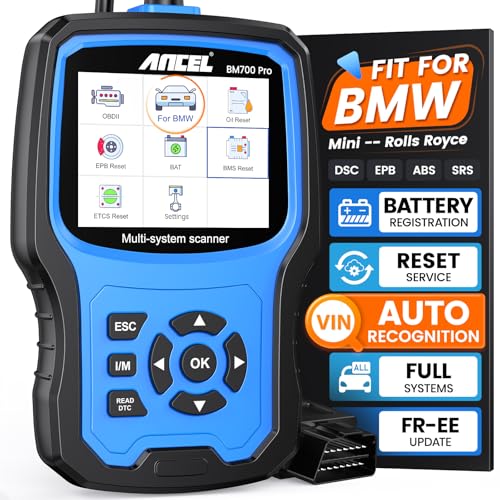
The ANCEL BM700 PRO feels like a professional diagnostic kit that actually fits in a garage drawer.
Plugging it into my 2015 BMW X5, the AUTO V‑IN feature instantly pulls the VIN, auto‑detects the exact model, and starts scanning every module in under a minute—no manual menu navigation.
The full‑system depth read gives me every engine, transmission, ABS, tire‑pressure, air‑bag, and A/C code all in one screen, so I can see the whole car’s health at a glance.
Battery registration is a breeze; the tool walks me through the process and logs the new battery for future reference.
The one‑click I/M readiness test is a lifesaver before my annual inspection, and the live data streams help me spot issues before they show up on the dashboard.
It’s truly plug‑and‑play, no Wi‑Fi or external power needed, and the dual‑mode display works great both day and night. The multilingual support means I can switch to my preferred language with a tap.
Pros
- Auto V‑IN: instant model detection, no manual setup
- Full‑system scan: every module, every fault code, all at once
- Battery registration: DIY, no shop needed
- I/M readiness: quick inspection prep, live data graphs
Cons
- Limited to 12V OBD2‑compliant cars (2000+); older models not supported
- Interface can be a bit cluttered when scrolling through many codes
Overall, the BM700 PRO turns a complex BMW diagnostic process into a simple, fast, and reliable task—perfect for enthusiasts and everyday owners alike.
1. ANCEL BM500 OBD2 Scanner for BMW

I’ve been using the ANCEL BM500 for the past month on my 2018 BMW 3 Series, and it’s been a game‑changer for DIY maintenance.
The step‑by‑step guides for EPB, oil reset, and PCM adaptations are so clear that I could follow them without a mechanic. Battery registration is a breeze—just plug it in, follow the prompts, and the new battery is synced instantly.
I appreciate that it covers everything from engine and transmission to ABS, SRS, and even ESP, so I can catch potential issues before they turn into costly repairs.
The scanner works flawlessly on other 12‑V cars too, giving me live data and quick code clearing. Plus, the lifetime free updates mean I never have to pay for new modules or features.
Pros
- Effortless EPB, oil reset, and PCM adaptations – no expert needed.
- Instant battery registration – saves time and avoids early failure.
- All‑system diagnostics – spot problems early across engine, transmission, and safety modules.
- Free lifetime updates – always up to date without extra cost.
Cons
- Battery programming not supported – still need to buy a separate tool for that.
- Interface can feel a bit clunky on older models – a touch of refinement would help.
Overall, the BM500 turns complex BMW and MINI maintenance into a straightforward process. It’s a solid investment for anyone who wants to keep their luxury vehicle running smoothly without always relying on a shop.
Frequently Asked Questions
What is the best BMW scan tool for deep diagnostics?
For comprehensive BMW diagnostics, the BMW‑specific OBD‑II tool “iCar Pro” is widely regarded as the top choice. It offers:
- Full ECU coverage (M57, M54, B58, etc.)
- Live data streaming and fault‑code logging
- Advanced functions such as ABS, ESP, and body‑control diagnostics
- Bluetooth/Wi‑Fi connectivity for use with a smartphone or tablet
- Regular firmware updates to support new BMW models
While generic OBD‑II scanners (e.g., Autel MaxiCOM, Launch X431) can read BMW codes, they often lack the depth needed for service‑center‑level repairs.
How do I connect an iCar Pro to my BMW?
- Insert the iCar Pro into the vehicle’s OBD-II port (usually located under the dashboard on the driver’s side).
- Turn on the ignition (engine off, key in the ON position or press Start without pressing the brake).
- Open the iCar Pro–compatible app on your smartphone or tablet (such as BimmerCode, BimmerLink, or the official iCar app).
- Enable Bluetooth or Wi-Fi on your device and select the iCar Pro from the available connections.
- Once connected, choose your BMW model and begin scanning for fault codes, live data, or advanced diagnostic functions.
Tip: Always keep the app and iCar Pro firmware updated to ensure compatibility with newer BMW models and control units.
Conclusion
When choosing a scan tool for BMW vehicles, the most important factors are compatibility with the latest models, comprehensive diagnostic coverage, and a user‑friendly interface that keeps technicians focused on the job rather than the device.
A good tool should provide real‑time data, fault code clearance, and the ability to perform advanced functions such as ECU programming or sensor calibration.
Reliable customer support and regular firmware updates are essential to keep the tool effective as BMW’s software evolves.
Ultimately, the best choice balances technical depth with ease of use, ensuring that every diagnostic session is quick, accurate, and hassle‑free.