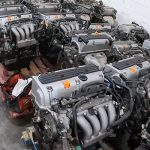
Among Honda enthusiasts, the B18B1 became a famous swap candidate engine, frequently referred to as an “LS swap.” The 1.8L engine contributed to the later-become-popular LS/VTEC conversion producing 142 horsepower and 127 ft-lbs of torque.
Now, what cars come with B18B1? The B18B1 engine came in the 1994-2001 Acura Integra RS/LS/SE/GS-DB7/DC4/DC3. Also, it was found in the 1992-1996 Honda Damani, 1993-94 JDM Integra, and 1996-1999 Honda Orthia (EL1).
Through this article, we are going to discuss every valuable detail about the engine and the cars this engine came with. You will know the performance of the vehicles also. If you are planning to rebuild or buy B18b1, you are in the right place to judge your decision.
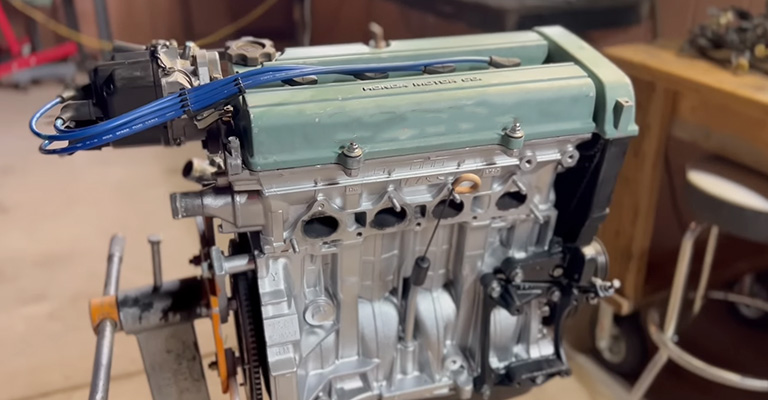
Specifications Of The B18B1 Engine
To understand the B18B1 Engine better, you should have a clear idea about its specifications. Those are:
| Parameters | Description |
| Compression | 9.2:1 |
| Displacement | 1.8L(1834 cc) |
| Bore x Stroke | 81 mm x 89 mm |
| Rod length | 137.01 mm |
| Stroke ratio | 1.56 |
| Redline(RPM) | 6800 |
| Rev limit (RPM) | 7300 |
| Power | 140 hp |
| Torque | 172 N.m |
| Transmission | Y80 hydraulic |
Advantages Of B18B1 Engine
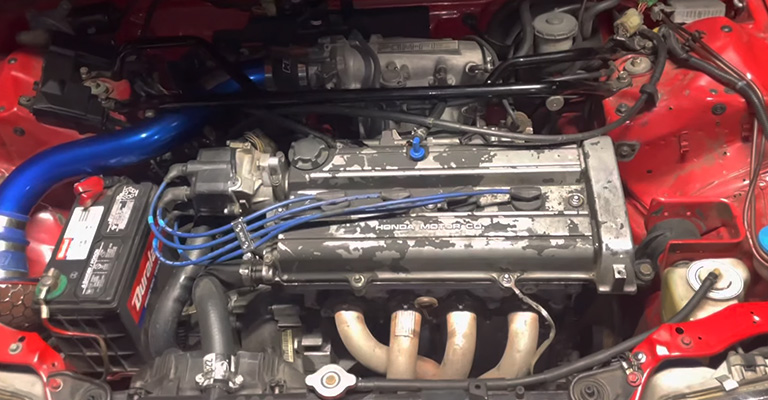
Now as you know the specifications of this engine, you will understand the advantages of this engine better. The advantages of B18B1 engines are
- The torque is 127 ft/s, which is suitable for a 1.8L engine
- No need for a forged piston to achieve the goal of HP
- It is an inexpensive engine compared to others that anyone can afford
- A good amount of power(142 hp)
- The compression ratio can be upgraded from 9.2:1 to 9.4:1
Disadvantages Of B18B1 Engine
Although the B18B1 engine has several advantages, it also has a few disadvantages. Those are:
- A thermostat and a water pump resources are limited
- There is a risk of penetration of the cylinder head gasket after traveling 200,000 kilometers
- Timing belt made for 90,000 km. Valves bend if the timing belt is broken
- After every 40,000 km, Valves need to be adjusted
What Cars Came With A B18b1: Common Issues, Causes & Solutions
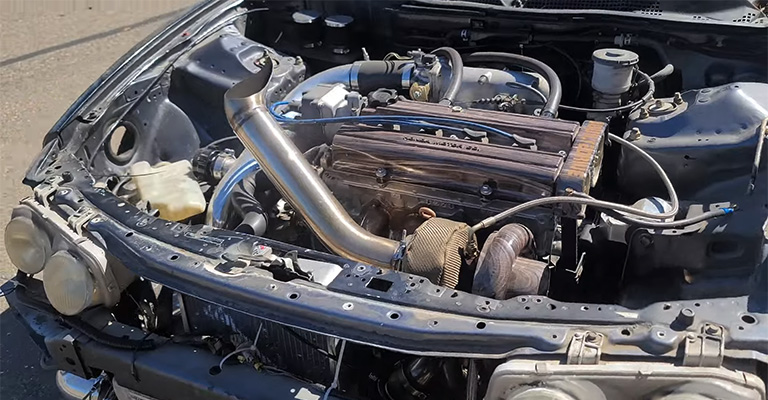
Obviously, it is one of the finest engines that Honda has made, but it comes up with several issues. Here we will mention some problems with their respective solutions,
| Models | Problems | Solutions |
1994 JDM Integra | Oil leaking | Replace the oil plug |
| Tighten the torque specs | ||
1995 Acura Integra | Clutch problems | Press gently during gear change |
| Use the handbrake under heavy pressure | ||
| Replace the clutch | ||
1999 Honda Orthia | Turbo issue | Regular maintenance and changing the oil |
Leaking of oil
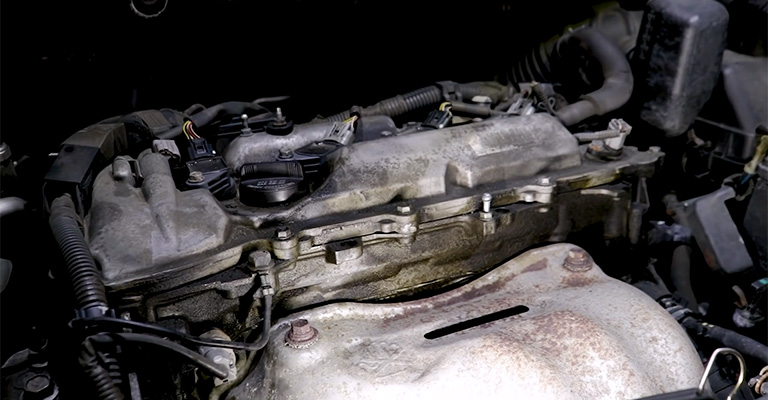
The leaking of oil is one of the most frequent problems that most engines experience. Half the battle is won just by figuring out where and how an engine is losing oil. The oil leak needs to be fixed immediately.
Long-term oil leaks might have adverse effects. You can not notice the leak until it becomes worse, and you might run out of oil. It may find its way onto your spark plugs and ignition.
Here are some signs that the B18B1 engine is leaking oil
Signs
- If you find oil under your vehicle, it is the most visible sign of the engine oil leak. It’s also possible that the power steering and transmission fluids leaked
You need to verify each of their levels. If the power steering fluid appears low or frothy, you may be looking at a power steering leak. If the oil is red, it might be the transmission oil
- Oil can smoke up the exhaust manifolds if it leaks from the correct place. You will find that smoke is coming from underneath the car
Reasons
- One of the most common cases of leaking oil is damaging the oil filter. Also, oil can leak from there because of insufficient sealing of the filter after putting oil last time
- Stripping out and leaving the oil plug loose is another reason for oil leaking
- The valve cover gaskets are frequently the source of oil leaks. And the location of the oil leak on the valve cover will affect how other components of the car are affected
- As you drive, for example, oil that is leaking from the valve covers above the exhaust will burn and smell. So the ignition system may have issues with this
- It is one of the most common places where oil is leaked. Between the oil pan and engine block, there is a gasket. If it goes bad, the oil leaking starts
Solutions
- If it is an issue with the oil plug, replace them to fix this problem
- Check the torque specs and tighten them if they are loose
- The gasket issue also needs to be replaced. Sometimes tightening the bolts may resolve the problem
- The resolution may take time, skill, and pressure
Clutch problems
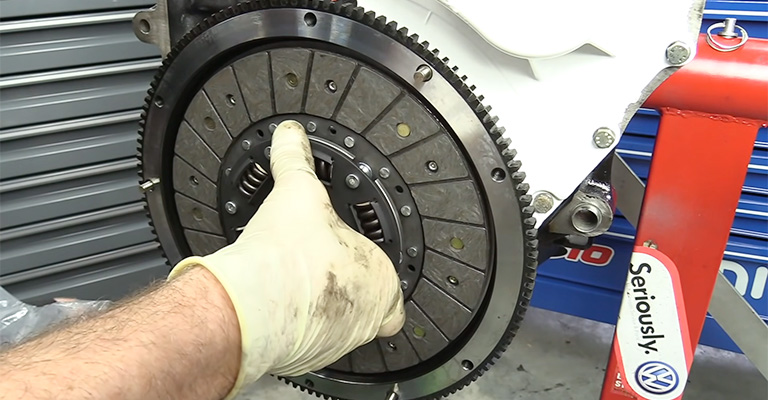
The Clutch is the part that connects the engine and transmission system. It’s responsible for transferring power from the engine. If the clutch wears out, It won’t be able to accomplish its job so well.
It will start to sag and lose its hold. Thus, it will eventually lose its ability to grasp the flywheel and will be completely useless.
Signs
- Unusual sounds will come if the clutch is malfunctioning. You will hear squeaking sounds when you engage the pedal of the clutch
- Coming lousy smell is not a good sign of the clutch. Although there are several issues from where the smell can come, it is highly possible that the clutch is entirely worn down
- The most common clutch issue is causing skipping. You can’t accelerate your car if it happens
- You can’t shift your gear properly if this happens. In this case, you will fave difficulty while transmission and shifting
Reasons
- Breaking or losing the clutch cable
- Failing of hydraulic master cylinder
- Bending the linkage will cause the clutch to fail
- Lack of hydraulic fluid fails the clutch also
- If the pressure plate diaphragm is stopped working, the clutch will be disengaged
- Burning of friction surface
Solutions
- Pressure gently when you change the gears
- Use the handbrake to take heavy pressure
- Replacing the clutch if anything serious happens
- Visit a mechanic for a proper solution
Turbo issue
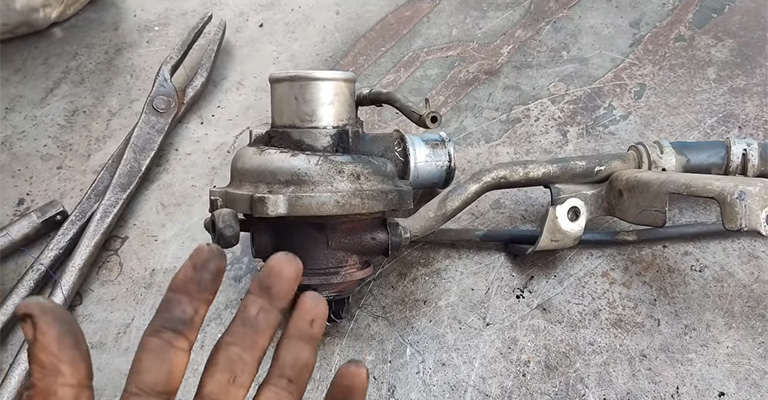
The primary purpose of a Turbo, also known as a turbocharger, is to boost the power of an engine. Although turbos are designed to last as long as the car, deterioration can develop with time. Here we mention some reasons and solutions for turbo problems.
Reasons
- A turbo needs oil to function properly with accuracy. Lack of oil, using the incorrect grade, or using low-quality oil will cause the engine to accumulate impurities and carbon deposits, which cause abrasive damage
- Although the turbo is made for long-lasting, it wears out over time. It will downgrade the quality with the increased usage
- Oil can leak into the exhaust system through damaged seals between the compressor and the engine. It will result in making the turbo work harder to boost air pressure
Solutions
- Regular maintenance of oil will increase the lifespan. For the best performance from a turbo, change the oil every 5000 miles
- Let the engine cool after every drive
- Before turning off the engine, avoid blipping the throttle
Honda B18B1 Engine Upgrade
The Honda B18B1 engine is renowned for its unmatched reliability. Most B-series enthusiasts will tell you that you won’t even need to open the engine if you want to get a “mild” horsepower figure out of your B18b1 (200–250whp).
Although it is exciting to think about constructing a big-power turbo Honda B18b1 engine, it is most important first to examine your build’s goal. The only restriction on a modified B18b1 is price. The options are truly limitless. In light of this, achieving 200–250 horsepower is an affordable aim.
- A turbocharger kit is the most typical high-horsepower modification for the B18B1 4-cylinder. Thus, the B18b1 is the ideal candidate for forced induction in stock form. Higher boost loads will therefore be necessary for the internal upgrades.
- The B18B1 needs minor adjustments to produce a dependable boost because it has a comparably low compression ratio.
FAQs
In this FAQ section, we will answer some common frequently asked questions about the B18B1 engine.
What Is The Average Cost Of a B18B1 Engine Swap?
The average cost of swapping B18B1 ranges between $1300 to $1800. Sometimes it costs $2000. By the way, the price depends on the conditions of the engine. Also, if you can swap it yourself, you can save the labor cost of around $500 to $1000.
Is B18B1 A VTEC Engine?
No, it is a DOHC non-VTEC engine. The advantages of having a VTEC head are incomparable. Although it’s non-VTEC, you can transform it into VTEC with some steps.
Conclusion
The B18B1 is one of the most famous engines of the B series that was made by Honda in the 90s. Although it’s a non-VTEC engine, it has more advantages. Besides, you can upgrade this engine for better performance. Also, upgrading the engine is cheaper than you think.
In this article, we discussed what cars come with B18B1. You can choose to buy any of those cars as this engine makes those cars ride smoothly in rough and harsh conditions. Some minor issues don’t have any negative impact on any customer.
Other B Series Engines-
Other D Series Engines-
| D17Z3 | D17Z2 | D17A9 | D17A8 | D17A7 |
| D17A6 | D17A5 | D17A2 | D17A1 | D15Z7 |
| D15Z6 | D15Z1 | D15B8 | D15B7 | D15B6 |
| D15B2 | D15A3 | D15A2 | D15A1 | D13B2 |
Other J Series Engines-
| J37A5 | J37A4 | J37A2 | J37A1 | J35Z8 |
| J35Z6 | J35Z3 | J35Z2 | J35Z1 | J35Y6 |
| J35Y4 | J35Y2 | J35Y1 | J35A9 | J35A8 |
| J35A7 | J35A6 | J35A5 | J35A4 | J35A3 |
| J32A3 | J32A2 | J32A1 | J30AC | J30A5 |
| J30A4 | J30A3 | J30A1 | J35S1 |